Growing Food & Beverage Brands Through Conversion Optimization
Food and beverage shoppers can’t taste your product before they buy it, and they feel every shipping fee before checkout confirms. We run Shopify testing programs that solve both — building the proof that replaces sampling and the basket economics that make shipping costs disappear into the value of the order.
The real challenges Food & Beverage brands face online.
The Perishable Shipping Problem
Shipping perishable or fragile food and drink is expensive, and shoppers usually only see the real cost at checkout.
Cart abandonment in food ecommerce is overwhelmingly a shipping-cost surprise, not a product-interest problem.
Subscription as an Afterthought
Repeat orders carry the margin in this category, yet most food and beverage stores present subscription as a secondary option buried near the add-to-cart button, instead of the obvious default choice it should be for a consumable product.
The Sampling Problem
Customers can’t taste, smell, or sample before buying online. Without strong reviews, clear flavor and ingredient descriptions, and sampler or trial-size options, that first order feels like a gamble — and shoppers who feel like they’re gambling often don’t buy at all.
Basket Economics That Don't Work
A single-item order rarely covers the cost of shipping it. Without bundles, multi-packs, and free-shipping thresholds calibrated to your actual margins, you end up converting customers at a loss on their first order.
We've seen these challenges before
Here's exactly how wetackle them.
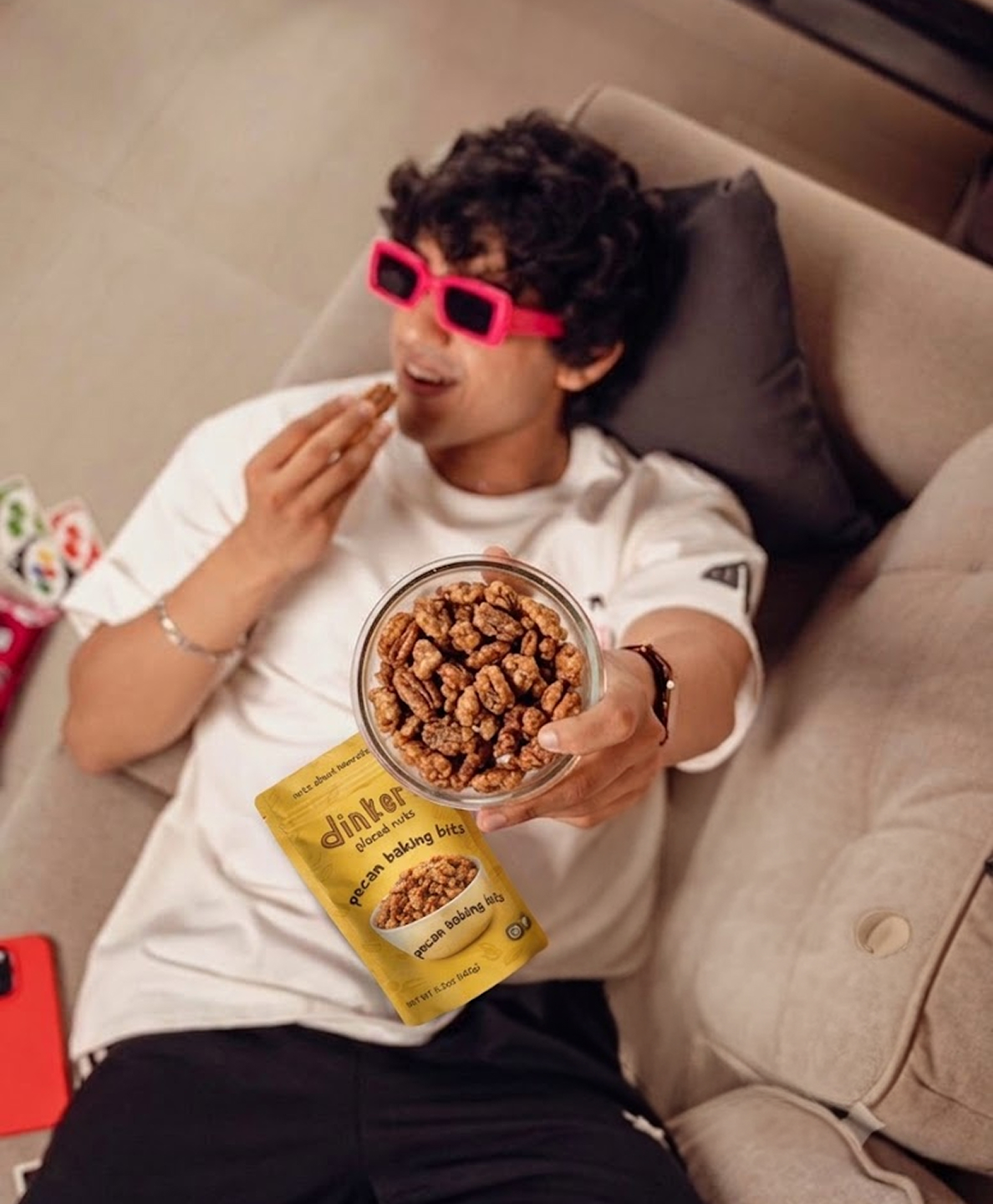
In food and beverage, we’ve found the single highest-leverage test is almost always shipping-cost visibility and threshold design — get that wrong and no amount of PDP polish fixes it. It’s part of why Shopify CRO programs like ours average a 41% increase in conversion rate across the brands we work with, including our work with Dinkers.
Audit
Find every leak costing you conversions today.
Hypothesis
Turn findings into ranked, testable revenue opportunities.
Testing
Prove each change on real customer behaviour.
Scale
Keep winners live and compound the gains.
Strategy and execution work best together. We
combine customer research, conversion-focused design, and rigorous A/B testing to turn
stores that look good into stores that sell measurably better.
From the first ad click to the confirmed order, every
step is measured.
What We Do For Food & Beverage Brands
Built for the way Food & Beverage brands actually grow
Store Audit
We find where shipping-cost surprises, weak subscription framing, or basket economics are costing you conversions.
A/B Testing
Every shipping threshold, subscription default, and bundle offer is proven on real customer behavior first.
Conversion
Optimization
More revenue from the traffic your brand and flavor story already bring in.
Product Page Optimization
Flavor descriptions, ingredient transparency, and review placement that replace the sampling a customer can’t do online.
Mobile Experience
Fast, simple browsing built for impulse-driven, social-sourced food and drink discovery.
Checkout Optimization
Shipping costs shown early, not sprung on the customer at the last step.
Retention Systems
Subscription defaults and reorder timing built around how often a customer actually runs out.
Helping food and beverage brands grow through shipping-cost transparency, subscription-first design, and continuous testing.Helping food and beverage brands grow through shipping-cost transparency, subscription-first design, and continuous testing.
Trusted by brands, who aren’tafraid to stand out.Trusted by brands, who aren’t afraid to stand out.
They have been fantastic to work with- he’s helped us on a number of custom web dev tasks and projects and always does great quality (and timely!) work. Looking forward to continue working with them.
Tracy D.
Agency Owner
Rana was extremely patient with this project and has been nothing but profoessional and kind. Looking forward to working with him soon
Renz G.
Public Speaker
Excellent work, very efficient and fast moving. Very highly recommend them. Will definitely rehire in the future.
Uri T.
Entrepreneur
Rana did an excellent job at completing all the tasks assigned to him. His communication was timely and whenever there was any confusion, he was willing to jump on a call to sort it out. He was also very responsive to feedback and adapted quickly.
What is a good conversion rate for a food ecommerce store?
Food and beverage stores generally convert between 2% and 4%, higher than most categories because purchase intent tends to be stronger by the time someone lands on the site. Repeat purchase rate matters more to the underlying economics than first-order conversion does.
How do I reduce cart abandonment caused by shipping costs?
Show shipping cost earlier in the journey rather than at the final step, and test free-shipping thresholds against your actual basket economics. The threshold that maximizes revenue is rarely the same one that maximizes conversion rate — the difference is worth testing properly rather than guessing.
How do I increase subscription signups for a food or beverage brand?
Make subscription the default selection rather than an alternative, and be explicit about flexibility to cancel or skip. Most hesitation comes from fear of being locked in, not from price — testing cancellation messaging often moves signups more than increasing the discount does.